Research Impact at Ohio State
Highlighting discovery, innovation and collaboration

Center for Brain Injury Recovery and Discovery Research Day highlights advances in care

Researchers, clinicians and students gathered at The Ohio State University’s Blackwell Inn for the Center for Brain Injury Recovery and Discovery Research Day, a two-day scientific symposium focused on advancing research and care for people living with brain and spinal cord injuries.

The symposium featured invited speakers, trainee talks and poster presentations, with dozens of undergraduate, graduate and postdoctoral trainees presenting their work. The event created opportunities for emerging researchers to share findings, receive feedback and engage with faculty and clinical leaders across disciplines.

“This work reflects the shared goal of improving lives through research,” said Jonathan Godbout, PhD, faculty director of the Center for Brain Injury Recovery and Discovery.

The second day opened with a survivor story that reflected the focus of the symposium.

Nearly four years ago, Amber Poindexter, a senior operations analyst at Ohio State, woke up expecting a normal day. Instead, she stepped out of the shower unable to speak.
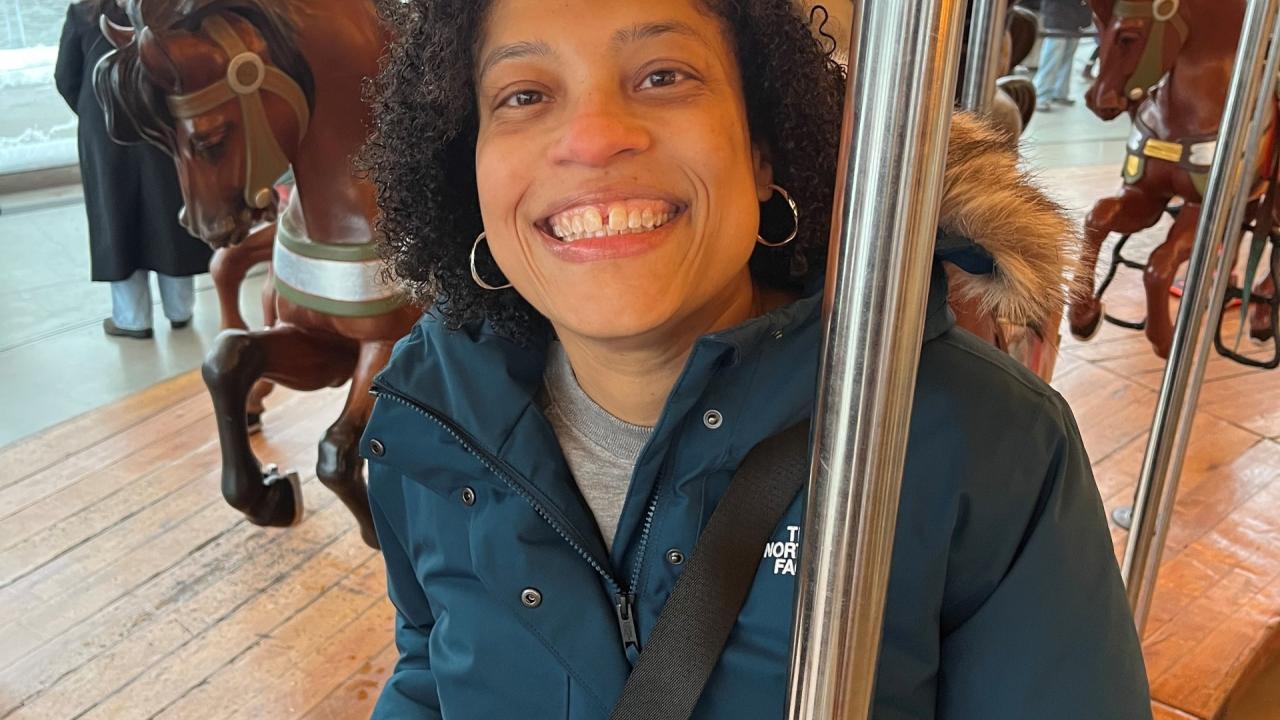
Amber Poindexter
Amber Poindexter, senior operations analyst for the university’s Board of Trustees

“I could not hear the water and I could not lift my arm,” she said.

Poindexter shared her experience alongside her husband and their two sons, both Ohio State students, offering a family perspective on stroke recovery and the challenges that follow.

Her husband called 911 that morning. She spent more than two weeks in the hospital and was later diagnosed with aphasia, a language disorder that affects communication.

“I thought maybe I had amnesia,” she said. “But really it was aphasia.”

Her recovery unfolded through small but meaningful milestones, from speaking clearly again to returning to everyday routines.

“I am happy. I am here. My life is good,” she said.

Her story provided context for the research presented throughout the symposium, connecting scientific work to the lived experiences of patients and families.

Among the student presenters was Dhruva Vanakeri, a fourth-year health sciences major, who shared research focused on improving breathing after cervical spinal cord injuries, which often limit respiratory function.

“These injuries affect breathing in a major way,” Vanakeri said. “We’re looking at how to activate more of the diaphragm so patients can generate stronger breathing.”

His work examines a noninvasive stimulation technique that delivers a mild electrical current to the spinal cord. In a rat model, the approach increased higher force breathing responses, even after injury.

Dhruva Vanakeri, a fourth-year health sciences major

“What we’re seeing is deeper, more effective breathing,” he said.

The research reflects a broader effort to develop therapies that help restore function by strengthening remaining neural pathways after injury.

Across the symposium, presentations explored topics including aphasia therapy, traumatic brain injury and neurorehabilitation, while poster sessions highlighted the breadth of student-led research taking place across the university.

“This is how progress happens,” Godbout said. “By bringing together discovery, training and real-world impact.”