Research Impact at Ohio State
Highlighting discovery, innovation and collaboration

Buckeye Tick Test helps Ohioans better understand growing disease risk

COLUMBUS, Ohio — As tick populations expand across Ohio, researchers at The Ohio State University are giving residents a clearer way to understand their risk for diseases and germs, including Lyme disease and Rocky Mountain spotted fever.

The Buckeye Tick Test, launched in 2025 as Ohio’s first mail-in tick testing service, allows Ohioans to submit ticks for identification and pathogen testing through a fee-based service, with results returned in as little as 72 hours. The service helps individuals determine what they have encountered and whether it poses a risk to their health or their pets.

The program is also positioning Ohio State as a leader in how tick-borne diseases are tracked, understood and communicated.

What began as a research effort to map tick populations across the state quickly grew into something more. As demand from the public increased, researchers partnered with the Ohio State’s Infectious Diseases Institute to build a service that could meet that need at scale and provide more accurate, accessible information to Ohioans.

Risa Pesapane, associate professor of ecosystem health in the College of Veterinary Medicine

“People want to know what they are dealing with,” said Risa Pesapane, associate professor of ecosystem health in the College of Veterinary Medicine. “They want accurate information that helps them make decisions.”

What sets the Buckeye Tick Test apart is how it delivers that information. Many testing services use the same panel for every tick, which can lead to misleading results. A tick may test positive for a pathogen it cannot actually transmit, creating unnecessary concern. The Buckeye Tick Test uses testing specific to that type of tick, meaning each tick is evaluated based on the diseases it is capable of spreading. The result is more precise and helpful information for the person receiving it.

The program also takes a broader view of health by testing for pathogens that affect both humans and animals. This “One Health” approach recognizes the connection between human, animal and environmental health and provides a more complete picture of risk.

“Access to accurate, science-based information is critical as tick-borne diseases continue to emerge and expand,” said Vanessa Varaljay, chief research officer of the Infectious Diseases Institute. “Programs like the Buckeye Tick Test not only support individual decision-making but also strengthen our ability to track and respond to public health threats across the state.”

In its first year, the Buckeye Tick Test processed nearly 6,000 ticks submitted from 86 of Ohio’s 88 counties, providing one of the most detailed looks at tick activity and disease prevalence in the state. The program also partners with state and local health departments to support surveillance and public health efforts.

Early findings show that about 20.5 percent of adult blacklegged ticks carry the bacteria that causes Lyme disease, while roughly 15.8 percent of nymphs are infected. In some areas, those rates are significantly higher.


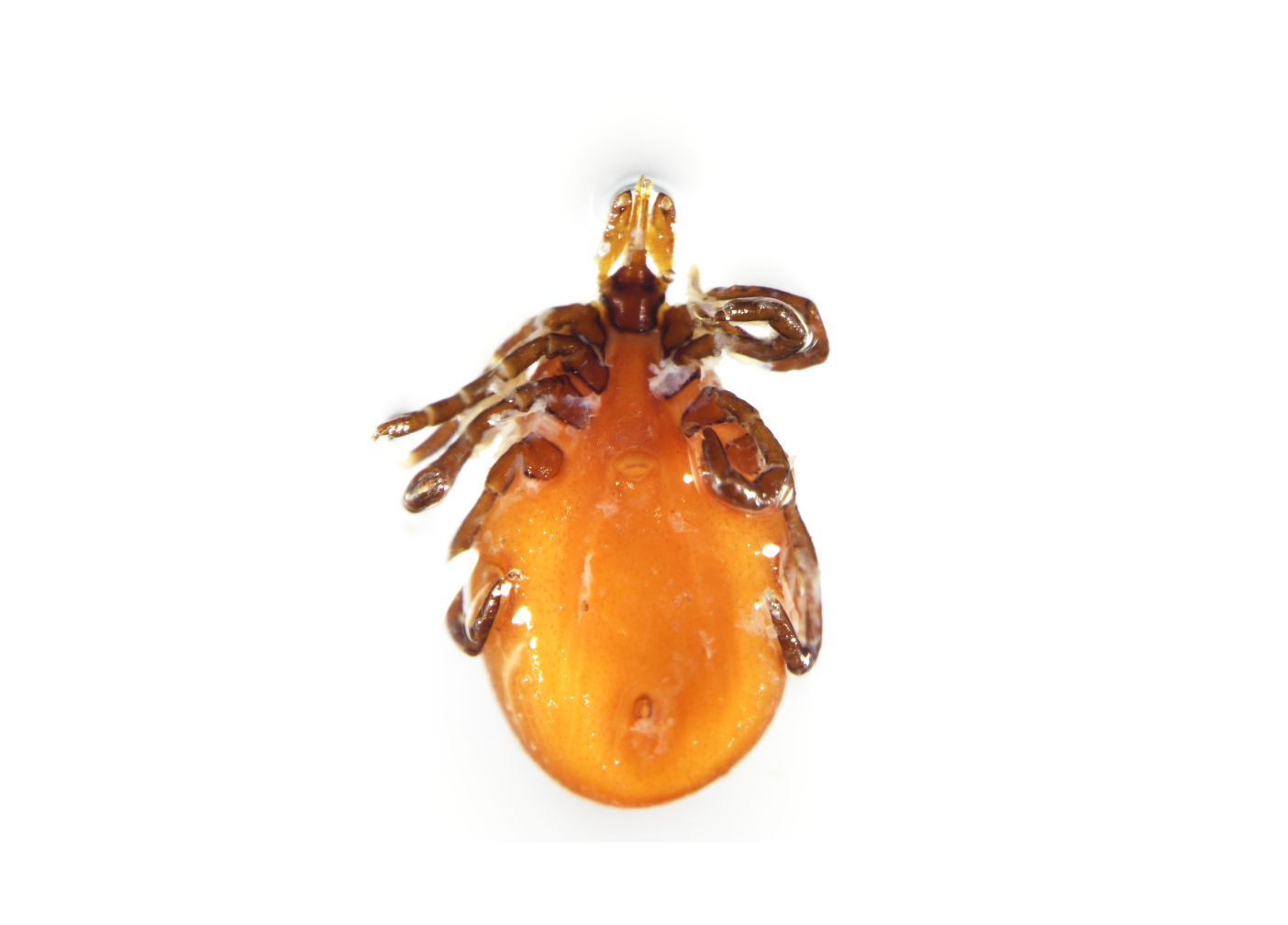
photo of Ixodes scapularis (blacklegged or deer ticks)
Ixodes scapularis (blacklegged or deer ticks) can transmit pathogens that cause Lyme disease, anaplasmosis and other associated illnesses.

The data is also reshaping how exposure is understood. Just over 44 percent of submissions indicate ticks were encountered in residential spaces such as backyards, and another 12.5 percent indicate tick encounters within the neighborhood, highlighting that risk is often closer to home than many people expect.

Beyond individual results, the program is contributing to a broader public health effort. Submissions provide insight into where ticks are found, when people encounter them and how disease prevalence is changing over time.

That data has already led to important discoveries, including the identification of the invasive Asian longhorned tick in a new Ohio county. It also supports local and state health departments as they monitor emerging threats.

Research from Ohio State helps inform national conversations as well. A recent study examining tick-borne disease risk in eastern Ohio was cited in congressional testimony focused on improving public health surveillance, highlighting the gap between actual risk and public awareness.

The timing of this work is especially relevant as May marks Lyme Disease Awareness Month, a national effort to increase understanding of prevention, early detection and treatment. The Buckeye Tick Test offers a way for Ohioans to take a more informed approach as awareness continues to grow.

“People really want what they’re experiencing to be recognized, and they want answers,” Pesapane said. “In some communities, families and their pets are dealing with tick-borne disease even when they are doing everything right.”

Researchers plan to expand the program’s reach across the state, particularly in eastern Ohio where tick-borne diseases are more common, yet surveillance is lacking. Increasing participation will strengthen the data and help ensure communities and health care providers have the information they need.

To submit a tick for testing or learn more about Ohio State’s work, visit buckeyeticktest.osu.edu.