Research Impact at Ohio State
Highlighting discovery, innovation and collaboration

How Ohio State Is Leading the Way in Smart Energy Use

The Ohio State University is developing the Energy Resource Data Hub to turn its campus into a real-world laboratory for understanding how buildings use energy, how people influence that use and how data can drive smarter decisions across both operations and research. 

Led by the Enterprise for Research, Innovation and Knowledge (ERIK), the Energy Resource Data Hub is a cloud-based platform designed to give researchers access to highly detailed, building-level energy data that is rarely available at scale. By combining utility data, weather information and indicators of building occupancy, the hub supports academic inquiry while also strengthening Ohio State’s long-term efforts to operate a more efficient and sustainable campus. 

The initiative grew out of a recognition that meaningful reductions in energy use and carbon emissions require better data. While most commercial buildings generate energy information, that data is often inaccessible or too coarse to support detailed analysis. Ohio State, with its large and diverse building portfolio, saw an opportunity to address that gap. 

In the early 2010s, the university began taking a closer look at its energy performance, asking whether additional investments in efficiency could deliver long-term value. The question was not whether Ohio State could become more efficient, but whether it was doing everything possible at a reasonable cost. 

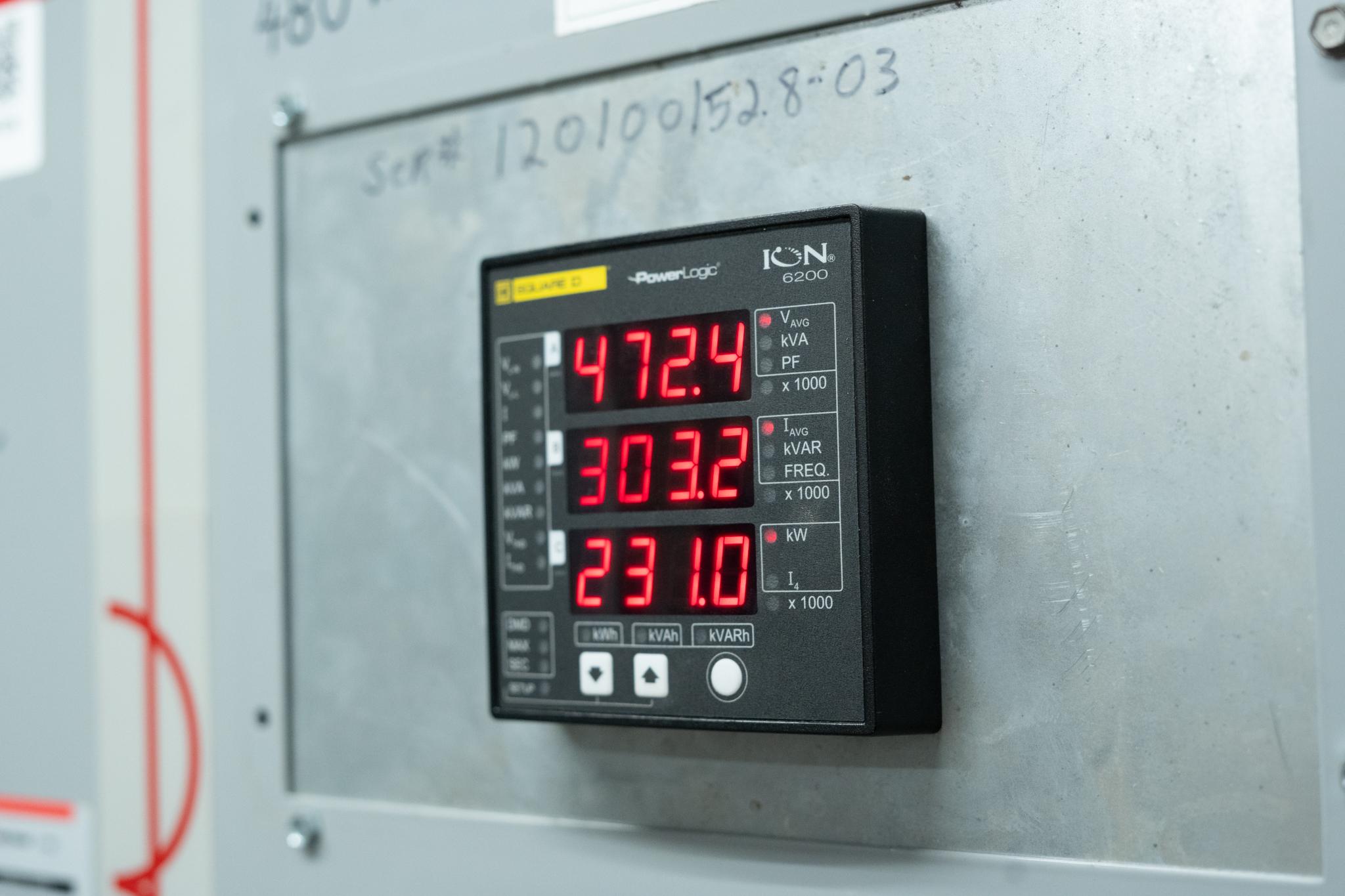
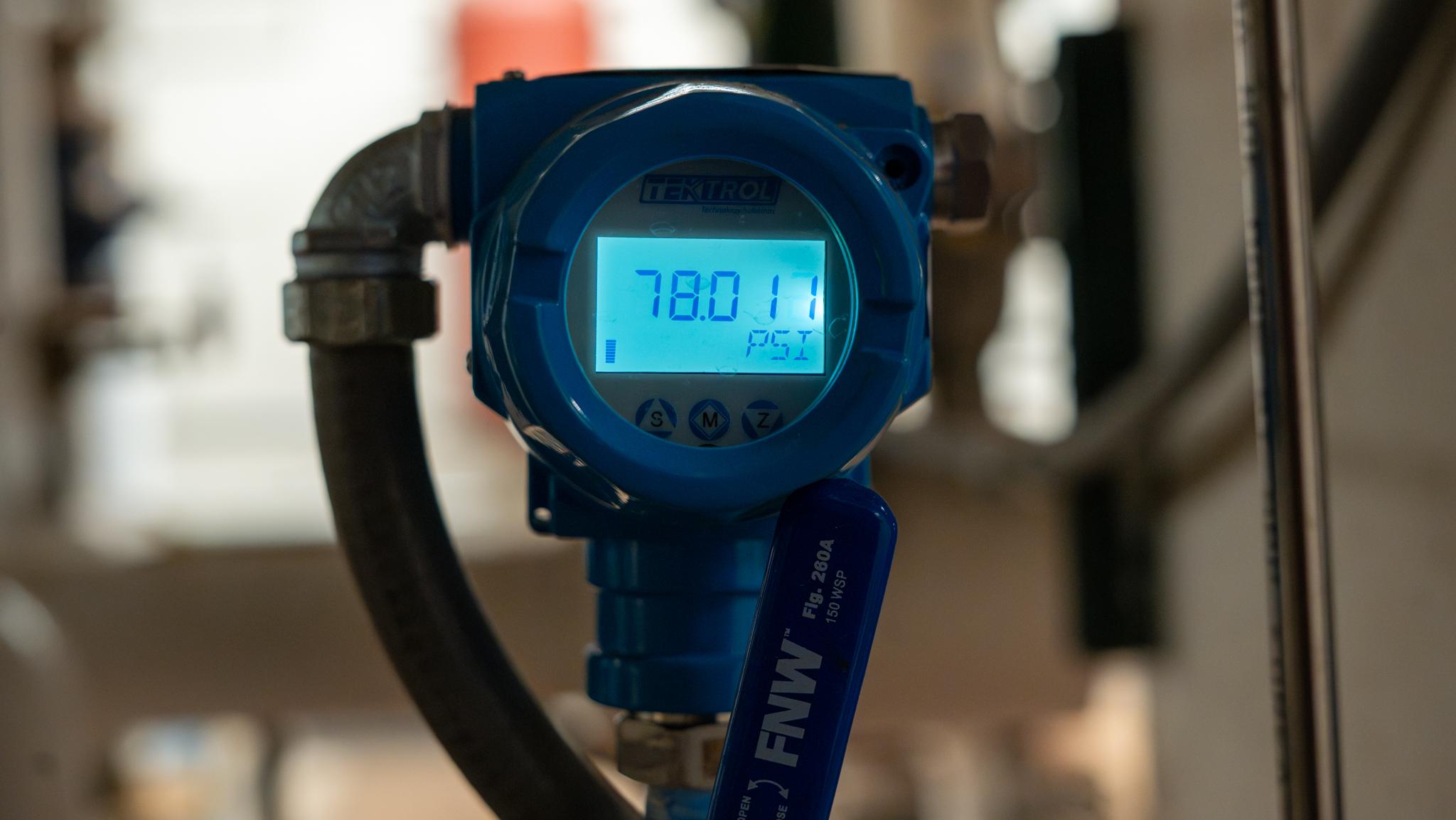
Smart meters across Ohio State’s campus track real-time energy use, feeding data into the Energy Resource Data Hub.

“You can always be more efficient,” said Scott Potter, senior director of comprehensive energy management at Ohio State. “But are we doing the things that we can do at a reasonable cost to save money?” 

That assessment led to a foundational insight: without accurate, granular measurement, meaningful savings were impossible. 

“You can’t save what you haven’t metered,” Potter said. 

Through Ohio State’s long-term energy partnership with ENGIE, the university began deploying smart meters across campus as part of a comprehensive energy conservation program launched in 2017. The metering infrastructure was initially intended to verify that efficiency upgrades — such as replacing outdated chillers or improving heating and cooling systems — were delivering the projected savings. 

“They were investing a lot of money in energy efficiency technologies on campus and trying to verify that those conservation measures were actually providing the benefit they thought they were going to get,” said Jordan Clark, associate professor in the College of Engineering and a core faculty member of the Sustainability Institute. “They realized we’re generating some valuable data with this metering infrastructure that not everybody has. And maybe there’s some use for this for research, for academic work.” 

Today, the Energy Resource Data Hub aggregates energy data from roughly 270 buildings across the Columbus campus. Smart meters track electricity, natural gas, steam, heating hot water and chilled water usage, capturing not only how much energy each building uses, but also when and how it is used, often at hourly or sub-hourly intervals.

“If you can imagine your utility bills that you get at your home or your apartment, it is that information sort of on steroids, at a granular level for every building on campus,” Potter said. 

The data extends beyond total consumption. Energy costs are heavily influenced by peak demand — how quickly energy is used and how much infrastructure is required to deliver it. 

“You pay for two things,” Potter said. “You pay for the actual commodity, the electricity or the natural gas. But you also pay for how quickly you use it or how big of a pipeline is necessary.” 

Smart meters across Ohio State’s campus track real-time energy use, feeding data into the Energy Resource Data Hub.

In select buildings, including the Chemical and Biomolecular Engineering building, additional sub-metering captures energy use within different types of spaces, such as laboratories, offices and common areas. The hub also integrates weather data and emerging indicators of building occupancy, sometimes referred to as plug load, which estimate how many people are using a building based on factors such as outlet activity and wireless network connections. 

“If you know there’s 1,000 wireless hits coming from one building, you can assume there’s 1,000 people on their phone or their laptop or some form of internet connection within that building,” Potter said. 

For researchers, this level of detail opens the door to new kinds of analysis. Clark said the data allows faculty and students to build more accurate building energy models, test “what if” scenarios without physically altering systems and compare Ohio State buildings against similar facilities elsewhere. 

“The more data you have, the more accurate you can make your models,” Clark said. “You can try a bunch of what-if scenarios, like what if we operated a building a little bit differently or installed a different piece of equipment, and see if we can squeeze some more energy savings out of it.” 

Another promising application is fault detection and diagnostics, which uses algorithms to identify anomalies in building systems that might otherwise go unnoticed. 

“You can identify things that aren’t working the way they should,” Clark said. “Things that aren’t really visible to the naked eye, but once you see them in the data, you can target them for maintenance and get efficiencies from making the system operate the way it’s supposed to.” 

While the Energy Resource Data Hub is still evolving, its impact is already visible in campus operations. Since 2018, Ohio State has reduced its overall energy use by approximately 16%, even as it has added new buildings, many of them complex and energy-intensive research facilities. 

“We use about 16% less energy per square food of conditioned building space now than we did when we started in 2018, even though we’ve added a whole lot of new building space since then,” Potter said. 

Energy performance is measured at the campus level using total energy consumption per square foot, ensuring that reported gains reflect real reductions rather than shifts between individual buildings. 

“If at the main meters campus hasn’t used less power, then it didn’t really do anything for us,” Potter said. 

  As ERIK continues to develop the Energy Resource Data Hub, the goal is to make institutional energy data easier to access and use, lowering barriers for researchers across disciplines while building a platform that can be expanded to incorporate additional, relevant data sources over time. With a campus that mirrors many of the commercial building types found across the country, Ohio State is positioning itself not only as a more efficient institution, but also as a national model for how operational data can fuel innovation in energy research. 

“It’s great that the university is leveraging its operations to help out researchers and students interested in this stuff,” Clark said. “It’s a win-win.”